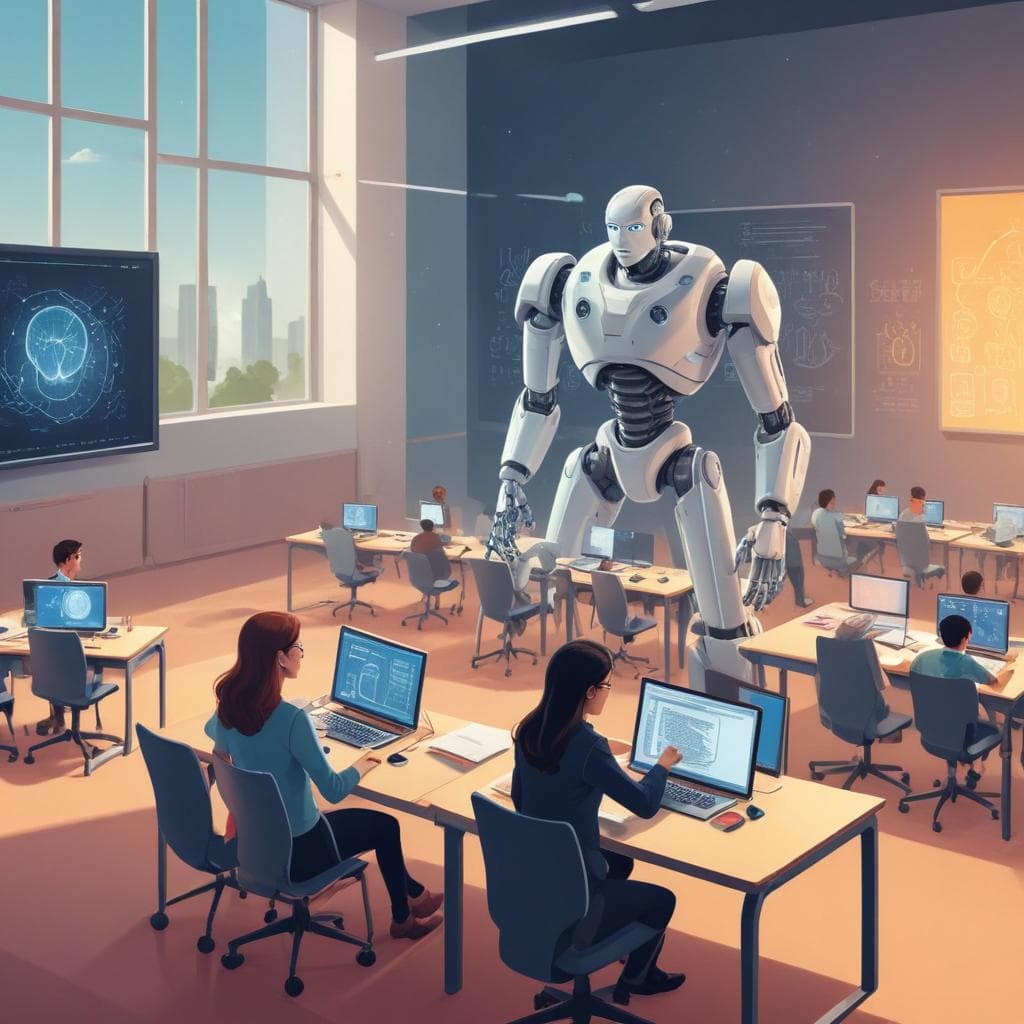
The Future of Education: AI and Programming in Universities
The intersection of artificial intelligence and programming is changing the educational landscape. Universities are exploring new technologies to enhance teaching, and while initial efforts are promising, the transition to widespread adoption faces significant challenges.
The New Era of Higher Education
With increasing digitalization, programming plays a crucial role in implementing artificial intelligence (AI) solutions in academia. Educational institutions worldwide are launching pilot initiatives to optimize various aspects of education, from academic advising to facility management. However, despite the expectations, there is a considerable gap between testing new tools and integrating them into the daily operations of universities.
Challenges in AI Implementation
A report from MeriTalk highlights that while 97% of leaders in higher education consider leveraging AI critical for student success, only 12% have effectively integrated this technology across multiple workflows. This low percentage underscores the difficulty of scaling AI solutions, which involves transforming individual projects into broad, sustainable strategies.
#### The Three P's: People, Processes, and Platforms
To move beyond the experimental phase, universities must focus on the “three P's”: people, processes, and platforms. By forming multidisciplinary teams, creating standardized processes, and selecting appropriate technology platforms, institutions can implement more effective programming solutions and foster community and collaboration among the various stakeholders in the educational system. Synergies among these three components are essential for successful adoption.
A Global and Local Context
Globally, education increasingly demands technological skills. For instance, the recent conflict in Israel has prompted the government to allocate NIS 1.1 billion ($377 million) to expanded education programs, reflecting the urgent need to compensate for disruptions and ensure quality education during crises. Undoubtedly, the role of programming and technology is vital to this effort.
Future Implications
The path toward a higher education transformed by artificial intelligence and programming is promising but filled with obstacles. Institutions must adopt a strategic approach to bridge the digital divide, forge partnerships with tech companies, and promote continuous training among faculty and students.
As the world adapts to this new reality, it is imperative that education evolves. Teaching programming skills from basic education can ensure that the next generation is prepared not only to use technology but also to innovate in its development.
What to Watch for in the Future?
In the coming years, it will be crucial to observe how universities implement these changes. Will they succeed in scaling their AI initiatives? Will new standards in technological education be established? The answers to these questions could define not only the future of education but also the development of the workforce in an increasingly digital world.
Conclusion
The integration of artificial intelligence and programming in universities is not merely a trend; it is an urgent necessity. As institutions face significant challenges, the possibility of transformative change is within reach. The key will be how they respond to this transformation and how they prepare their students for a future that is rapidly moving toward technology.